Selected for Google for Startups Immersion
I have been selected for Google for Startups Immersion, powered by Antler: years of high-accuracy materials modelling, now inside a product, and a programme built to take it further.
Google for Startups Immersion is a programme run by Google for Startups with Antler. This edition is for founders across Europe, the Middle East and Africa who already have a live product and want to take the intelligence inside it further. It pairs Google’s engineering depth with Antler’s experience in building and funding companies.
How the programme works
- Phase one, 22 to 28 October: four online sessions, with tracks for founders and technical leads. Google engineers cover building artificial intelligence deeply and reliably into live products; Antler’s team covers venture strategy, fundraising and go-to-market.
- Phase two, December: 25 startups from the first phase are invited to an in-person immersion at Google’s office in London, with architecture whiteboarding alongside Google engineers and one-on-one mentorship from Antler.
Why it fits Quantanomous
At Quantanomous, our software designs materials from the properties a product needs. Our first focus is lead-free piezoelectric ceramics, the materials inside ultrasound probes, sonar and car sensors, ahead of Europe’s 31 December 2027 deadline for taking lead out of them.
The app already runs. Engineers set their targets and what to avoid, and get ranked candidate compositions back. An assistant takes requests in plain language and does the work inside the app, and calculations start only when the user approves them. The periodic table shows toxicity, price and supply risk before a search begins.
In materials, intelligence is only useful if it is honest about what it does not know, because every wrong turn costs months of lab work. That is why each of our predictions carries a calibrated uncertainty. It is also the question I bring to this programme: how to build that kind of reliability into every layer of a live product, from the models to the screen an engineer acts on.
Next stop: London
Phase two brings 25 startups to London in December. My co-founders Suhas Yadav, Hemanadhan Myneni, Arunkumar Rajan and I intend to be among them.
The selection comes days after we pitched Quantanomous at Luxembourg Venture Days, which I write about in four minutes in Luxembourg.
Thank you to Google for Startups and Antler for the opportunity. If your products depend on piezoceramics and the 2027 deadline is on your desk, I would be glad to talk.
Learn more about Quantanomous at quantanomous.com.
About the Author

I'm Dr. Ravindra Shinde, a computational physicist and quantum chemist. My work spans quantum chemistry, condensed matter physics, AI for materials, and scientific computing: I use and develop electronic-structure methods to understand how electrons shape the properties of molecules and materials, and I build the software that makes those calculations possible.
Continue reading
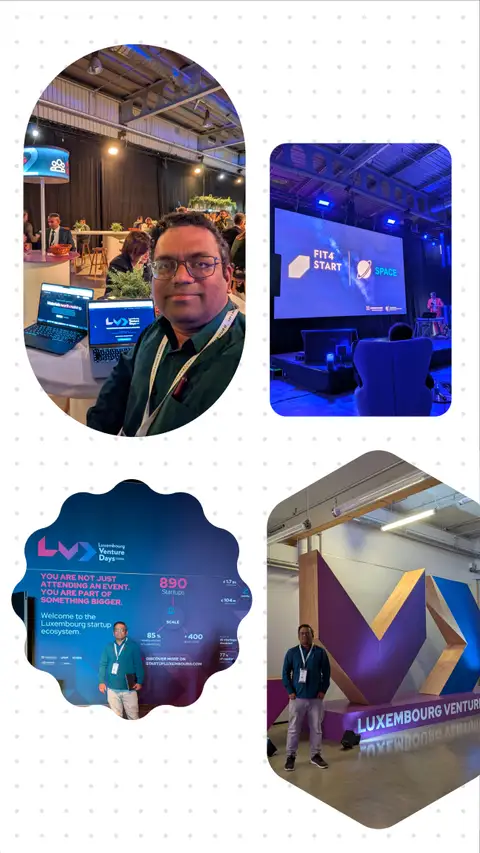
Four minutes in Luxembourg
Pitching Quantanomous at Luxembourg Venture Days: one idea, one deadline, a decision that did not go our way, and the conversations that came after.
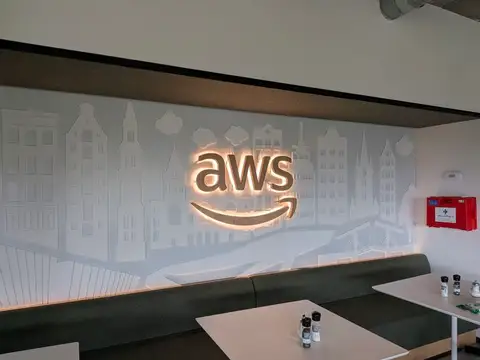
A day at Amazon Amsterdam
A visit to the Amazon office in Amsterdam, and knowledge to carry into upcoming ventures.
75 million CPU hours on LUMI for quantum Monte Carlo forces
Our EuroHPC project, Learning from Quantum Monte Carlo Forces, has been awarded 75 million CPU hours on the LUMI supercomputer.