Google for Startups Cloud Program grant for Quantanomous
Quantanomous has been accepted into the Google for Startups Cloud Program. The credits will pay for the computing behind our materials discovery platform, from high-accuracy simulations to the models that learn from them.
Quantanomous has been accepted into the Google for Startups Cloud Program, which helps early-stage companies build on Google Cloud, and has been granted cloud credits through it. It comes a month after I was selected for Phase 1 of Google for Startups Immersion.
Putting the grant to work
Designing a material in software takes a lot of computing. Our platform learns from structures computed with methods more accurate than standard density functional theory, corrects its AI predictions with physics, and gives every prediction a calibrated uncertainty. Each customer’s specification starts a new search across many candidate compositions, and only the strongest go on to the lab.
The credits let us run that work at a larger scale, and sooner. That starts with our first focus, lead-free piezoelectric ceramics, which manufacturers need before Europe’s 31 December 2027 deadline for taking lead out of them.
Thank you to Google for Startups for the support. If you make, use or invest in advanced materials, I would be glad to talk.
Learn more about Quantanomous at quantanomous.com.
About the Author

I'm Dr. Ravindra Shinde, co-founder and CEO of Quantanomous, a company that designs new materials to a customer's specification. I am a computational physicist and quantum chemist by training. My work spans quantum chemistry, condensed matter physics, AI for materials, and scientific computing: I use and develop electronic-structure methods to understand how electrons shape the properties of molecules and materials, and I build the software that makes those calculations possible.
Continue reading
Selected for Google for Startups Immersion
I have been selected for Google for Startups Immersion, powered by Antler: years of high-accuracy materials modelling, now inside a product, and a programme built to take it further.
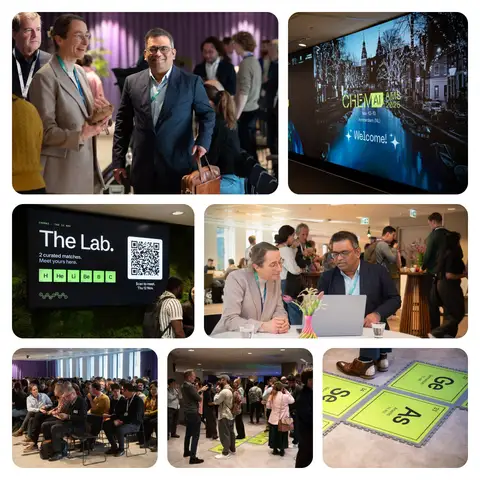
A day with the builders at ChemAI 2026
At ChemAI x Deep Tech Builders in Amsterdam: why AI for science is still up for grabs, what investors and corporates were asked to change, and the conversations I brought home for Quantanomous.
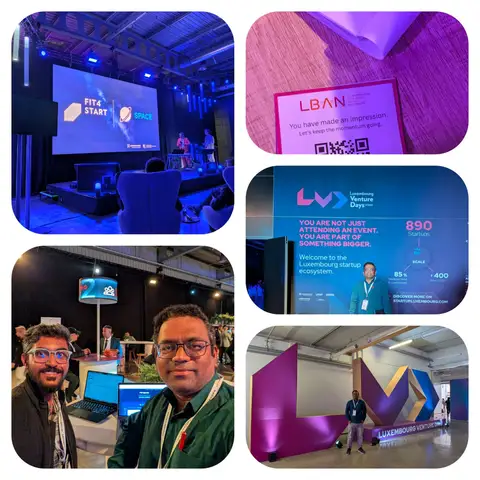
Four minutes in Luxembourg
Pitching Quantanomous at Luxembourg Venture Days: one idea, one deadline, a place in the top 24 at Fit 4 Start, and the conversations that came after.